• We help with

    Career Marketing.

  • We help with

    Talent Search.

  • Keep in touch

    Stay updated.

The Five Second Rule – The Attention grabbing resume/cv


Tips for “the attention grabbing resume”
  – If you prefer audio you can also listen to the tips here

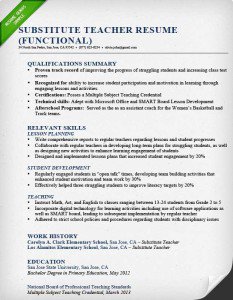
I get a lot of requests to give people feedback on their resumes and because this is a time consuming exercise I usually cannot do justice in one sitting . I have come up with a few general tips that I would like to share with anybody who may be asking “Is my resume any good”?. The general rule is that your resume must pass ” the five second rule”. It only takes five seconds to make a first impression and you can only make a first impression once so make those five seconds grab the recruiters attention. I will give some tips on how to do this shortly but before I do that I would like to discuss the question ;

” What is the difference between a resume and a curriculum vitae (cv) “? ” A rose by any other name would still smell as sweet” (Juliet in Shakespeare’s Romeo and Juliet).

Resume is a French word for “summary”- This is a snippet of one’s education, skills and employment and is usually about 1- 2 pages.

Curriculum Vitae is latin meaning “course of life” and is a more detailed narration of one’s professional experience and is generally about 2-3 pages but can be longer.

In my professional opinion though this is just semantics and the difference does  not really matter and usually a prospective employer will tell you what they want you to submit when applying for a job. The most important thing in my view is the content so focus on that .

5 second rule tips

Professional Summary

In my opinion this is the most important part of your resume as this is a summary of who you are , what your skills are and basically tells me why I should look at the rest of your resume. This section of your resume will either ” grab ” my attention or not.

Errors

Nothing will kill your chances for an interview faster than a resume or cover letter with an error or errors. Proof read and spell check your documents … whatever you do make sure that when you submit that resume there are no errors.

White Space

A resume without white space suggests clutter and chaos so make sure that there is enough white space around your paragraphs to make it easier on the eye.

Formatting

Alignment – make sure that all text , headers, bullet points and paragraphs are all aligned correctly. Even if one is slightly out it will be noticed immediately. Make sure the page margins are the same through out the document.

Font type – There are literally 100’s of different type of fonts to choose from . I recommend you choose simple and conservative . The most common types are Arial and Times New Roman.

Font style– be consistent in your font style . You can use bold , underline , italics , caps to attract the attention of the reader to key points- just be consistent

Font size – For easy reading always use one font size throughout your resume ( 10-12 points). You can increase these to 14 points for the headings.

Pictures? 

I do not recommend photos – they take up valuable space, serve no purpose and can be a hit or a miss!

For a deeper insight into your resume and individualized tips you can contact me on batje@humhr.org.

Economic Recovery and Resilience in Crisis Environment.

I just wanted to highlight this USAID Microlinks Webinar taking place today , Tuesday (10th November) about Economic Recovery and Resilience in Crisis Environment. 

https://www.microlinks.org/events/mpep-seminars/economic-recovery-and-resilience-crisis-environments​​

When: Tuesday 10 November 2015, 09:00 AM – 10:30 AM​​

Time Zone: (GMT-05:00) Eastern Time (US and Canada)​​

Description:Today we face an unprecedented refugee crisis in Syria and recurrent natural disasters in places like the Philippines and Nepal. In this context, the SEEP Network is working to revise the Minimum Economic Recovery Standards (MERS). These standards articulate the minimum level of technical and other assistance to be provided to enable economies and livelihoods to recover after a crisis.

In this month’s Microlinks Seminar, we will discuss the MERS and learn from other fields practitioners’ lessons from a variety of complex operating environments.

Topics to be discussed:​​

(a) How have humanitarian agencies promoted economic recovery for affected populations in Nepal, Syria, the Philippines, and Haiti?
(b) What lessons are most useful to practitioners regarding what constitutes an effective response?
(c) What are some of the key lessons we need to focus on when revising the MERS?

The MERS were developed in 2009 and revised in 2010 with input from hundreds of practitioners on effective assistance to disaster-affected populations. The SEEP Network is updating the MERS with support from the Office of Foreign Disaster Assistance. This provides  a unique opportunity to discuss the latest advances and challenges in global development and disaster relief.

Introducing HUMHR – Partnering with you to do good!

The value of partnerships is oft times underestimated but there is strong merit in acknowledging the need for symbiosis as humanitarian organizations pursue their missions in an effort to do good. We often try to do too much by ourselves and in the process compromise the standard and quality of our work. When dealing with the most critical resource for mission effectiveness, the human resource;  we cannot “cease from exploration”. We have to constantly review , update and test our ideas, processes and “way of doing things” as we recruit, develop, mentor and retain staff.

Intriguingly, the department that works for the good of human resources is often ignored, relegated and in some instances non-existent. It is often one of the first departments to face cuts when things go south. All to often there are not enough people in the HR department to adequately meet the organizational needs and HUMHR believes that partnership can fill that gap in a cost effective manner.

HumHR (pronounced “Humor or Humour” – [(h)yo͞omər]) was founded to serve the humanitarian world through a well-connected network of partners in the United States, Africa and the Caribbean. We harness the power of partnerships to provide a dynamic boutique service that places high quality candidates while developing a continuous talent pool.

The mission of HUMHR  is to provide a seamless value-add service to our clients in a simple, ethical and transparent manner. This blog will be used as an interactive forum to chat with you about the services we offer or share with you insights from our experiences in the HR world.

We look forward to “partnering with you to do good”!

//humhr.org/wp-content/uploads/2020/03/logo.png

Our mission is to provide a seamless value-add service to our partners in a simple, ethical and transparent manner.

Newsletter

Enter your email address here always to be updated. We promise not to spam!